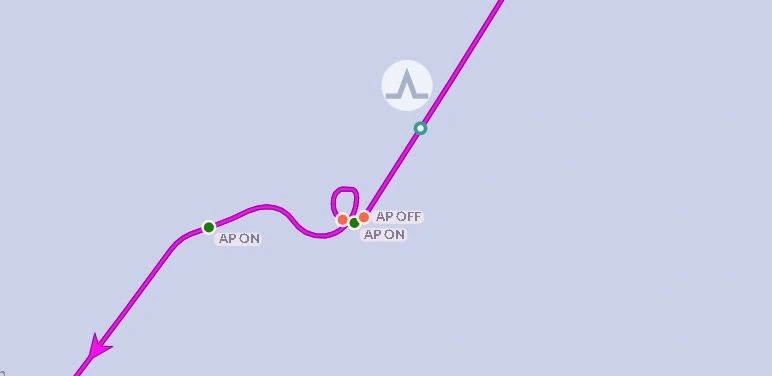
In January 2026, a Colt owner completed a cross-country flight from Santa Catarina to São Paulo when an unexpected weather encounter led to a serious in-flight upset. What followed was a textbook example of pilot skill under pressure — and an unplanned but definitive stress test of the Colt's airframe.
Flight data recorded by the onboard Garmin G3X tells the story precisely:
Peak airspeed during recovery: 179 kts
Maximum vertical speed: -11,768 fpm
Peak G-load: 6.396 G
The pilot successfully recovered the aircraft. A subsequent thorough inspection found no structural stress or fatigue on the airframe — none.
No controlled test environment. No scripted parameters. This was a real flight, real conditions, and a real recovery — and the Colt performed exactly as its engineering demands.
For flight schools, operators, and pilots considering the Colt as their platform of choice: this is the kind of data that doesn't come from a brochure.
This structural resilience is no accident. Read about the Colt's recent spin training certification in Brazil — another milestone in the aircraft's growing validation story: spin certification post